Ehsaas Program Registration 2026: Complete Guide to 8171 Online Check and NSER Dynamic Survey
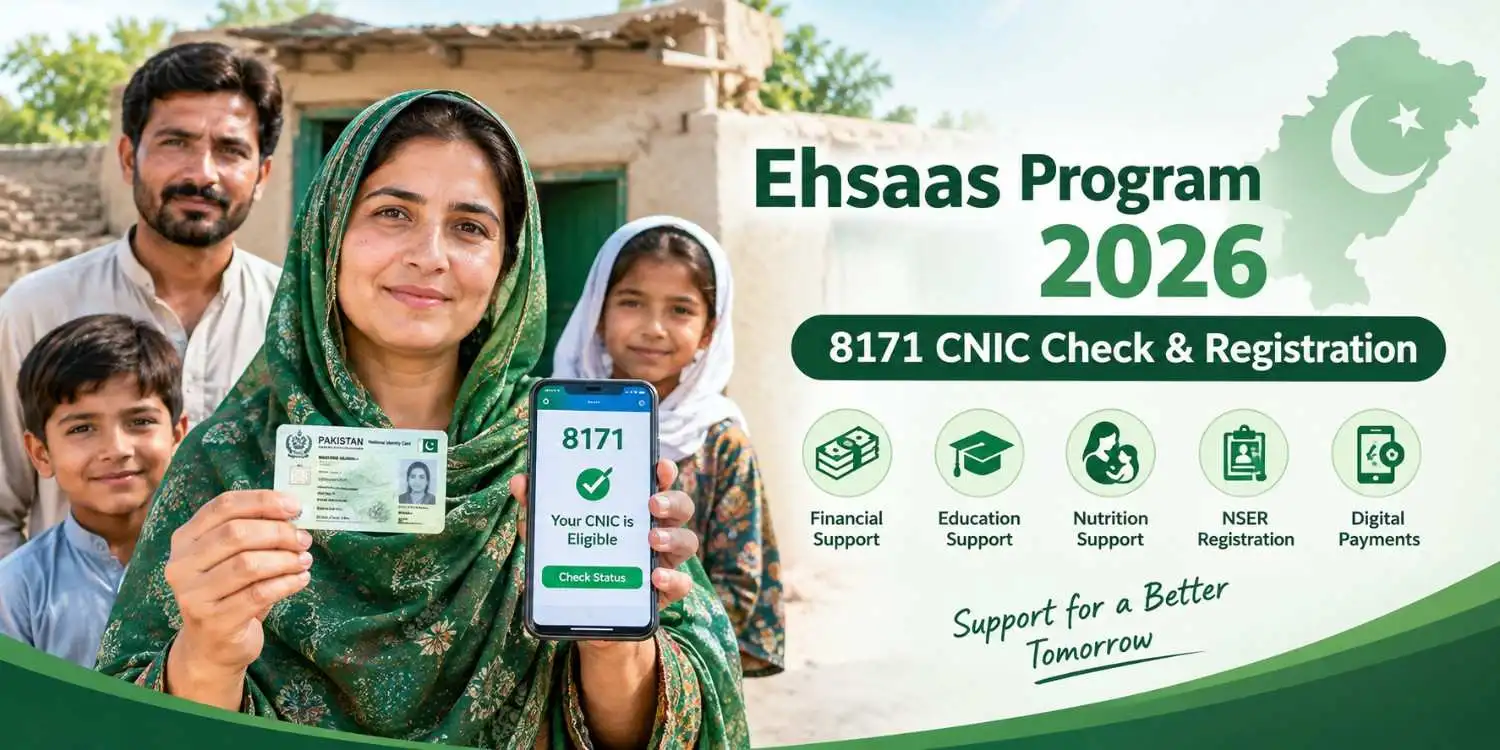
Social welfare initiatives play a pivotal role in providing economic relief to low-income households across Pakistan. Originally launched as the Ehsaas Program and now integrated closely under the umbrella of the Benazir Income Support Programme (BISP), these social safety nets continue to evolve to ensure that financial aid reaches the most vulnerable citizens.
As we look toward 2026, the government has streamlined registration processes through the ongoing NSER (National Socio-Economic Registry) Dynamic Survey. If you or someone you know wants to register for financial assistance, educational stipends, or health subsidies, this complete tells everything you need to know about eligibility, registration, and status checking.
Also read; BISP 8171 October Payment 14,500 Check Eligibility and Verification
Short Summary Table: Ehsaas / BISP Program 2026
| Feature | Details |
|---|---|
| Program Name | Ehsaas Program (BISP) |
| Registration Method | NSER Dynamic Survey at Tehsil Center |
| Required Documents | CNIC, B-Forms, Utility Bills |
| Status Check (SMS) | Send CNIC to 8171 |
| Status Check (Web) | 8171.bisp.gov.pk |
| Primary Beneficiary | Female Head of Household |
| Official Helpline | 0800-26477 |
| Application Fee | 100% Free |
| Official Sender ID | 8171 |
What is the NSER Dynamic Survey?
In the past, household surveys were conducted once every few years, leaving out families whose financial conditions deteriorated over time. To solve this, the government established NSER Dynamic Registration Centers at the Tehsil level across Pakistan. The Dynamic Survey allows families to update their socio-economic data continuously. Whether you were previously declared ineligible or are applying for the first time, visiting an NSER registration center ensures your data is updated in the central system for 2025–2026 distribution cycles.
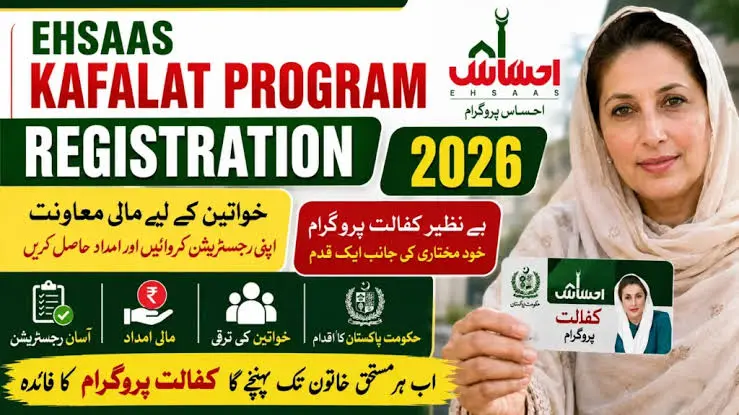
Major Sub-Programs Covered Under Registration
When you complete your NSER survey, your household is evaluated for several social safety programs, including:
- Kafaalat Program: Unconditional quarterly cash transfers directly to eligible women heading low-income households.
- Taleemi Wazaif: Conditional education stipends for school-going and college-going children of registered families to encourage enrollment and reduce dropout rates.
- Nashonuma Program: Specialized nutrition and health support designed for pregnant mothers, lactating women, and children under two years of age to prevent stunted growth.
- Undergraduate Scholarship Program: Higher education scholarships for deserving students from low-income families.
Eligibility Criteria for Registration
To qualify for cash grants and benefits under the government’s welfare network:
- Nationality: The applicant must be a citizen of Pakistan possessing a valid CNIC issued by NADRA.
- Household Head: Preference for financial grants (such as Kafaalat) is given to the primary female head of the family.
- Poverty Means Test (PMT) Score: The household’s PMT score calculated based on assets, income, family size, and living conditions during the NSER survey must fall below the official government threshold.
- Ineligibility Exclusions:
- Government employees (and their spouses).
- Individuals owning high-value real estate, commercial assets, or registered motor vehicles (excluding motorcycles).
- Individuals with a history of frequent foreign travel.
Step-by-Step Registration Process (NSER Registration)
Step 1: Gather Required Documents
Before heading to the center, ensure you have:
- Original CNIC of the female applicant.
- Original B-Form (Child Registration Certificate) for all children issued by NADRA.
- Electricity and gas utility bills for your household.
Step 2: Visit Your Nearest Registration Center
Visit your local BISP / Ehsaas Tehsil Registration Center. These centers are located within local government offices or designated social welfare hubs across every district.
Step 3: Complete Data Entry & Verification
- Submit your CNIC at the registration counter.
- A data entry operator will interview you and fill out a survey questionnaire regarding your family size, monthly income, home infrastructure, livestock, and expenses.
- You will provide biometric verification (fingerprint scan) to confirm your identity.
Step 4: Survey Confirmation
Once the survey is submitted, you will receive a confirmation SMS or receipt confirming that your household data has been entered into the NSER database for score calculation.
How to Check Your Registration & Payment Status
Once registered, citizens can check their eligibility and payment distribution status through two official methods:
Method 1: Check Via SMS (Free)
- Open your mobile phone text messaging app.
- Type your 13-digit CNIC number (without dashes or spaces).
- Send it to 8171.
- You will receive an official automated response detailing your eligibility status or advising on the next steps.
Method 2: Check Via Official Web Portal
- Visit the official 8171 web portal: https://8171.bisp.gov.pk/
- Enter your 13-digit CNIC number in the provided field.
- Enter the security captcha code shown on the screen.
- Click Submit to view your real-time registration and payment status.
Fraud Warning: How to Protect Yourself
Due to the widespread reach of government cash assistance programs, fraudsters frequently attempt to scam vulnerable citizens. Keep these security rules in mind:
- Official Sender ID Only: Official communications regarding payments and eligibility are sent strictly from 8171. Any SMS received from standard mobile numbers (eg, 0300-xxxxxxx) offering grants or prize money is a scam.
- Zero Registration Fees: The registration survey, status checks, and card issuance are 100% free. Do not pay any money to agents or individuals claiming to process your application.
- Avoid Unverified Apps & Websites: Do not download third-party Android APKs, click short links sent via WhatsApp, or fill out unofficial Google Forms asking for sensitive personal information or bank details.
Conclusion
The Ehsaas Program, now deeply integrated within the Benazir Income Support Programme (BISP), remains a cornerstone of Pakistan’s social safety network. Designed with the vision of economic justice, female empowerment, and poverty reduction, this initiative continues to transform the lives of millions of low-income households across the country.
As Pakistan moves toward 2026, the program’s success increasingly relies on the accuracy of the NSER Dynamic Survey. This continuous data collection model ensures that benefits reach those who are genuinely in need, adapting to the ever-changing financial circumstances of families. By maintaining an active, transparent, and data-driven system, the government is bridging the gap between policy and the people.